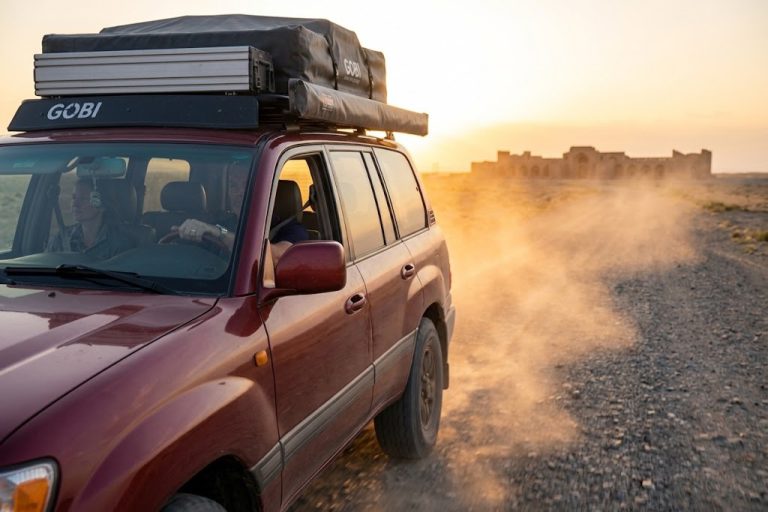
Kerman Travel Guide: discover one of Iran’s most fascinating and often overlooked destinations. Located in southeastern Iran, Kerman sits along ancient trade routes and offers a remarkable mix of historic architecture, traditional bazaars, Persian gardens, desert landscapes, local handicrafts, and extraordinary natural scenery. Its location also makes it an excellent base for exploring nearby destinations such as Mahan, Rayen, Shahdad and the Lut Desert, and Bam.
The city itself is worth exploring for its historic bazaar and the Ganjali Khan complex, but Kerman becomes even more interesting when you look beyond the city. Within the wider region, you can visit the beautiful Shazdeh Garden in Mahan, the imposing Rayen Castle, the extraordinary Kaluts of the Lut Desert, the ancient city of Bam, and the unique cave dwellings of Maymand.
This makes Kerman particularly rewarding for travelers who want to experience a different side of Iran, one that combines history and culture with dramatic landscapes and a slower, more local atmosphere.
If you are planning a trip to Iran and wondering whether Kerman deserves a place on your itinerary, this guide will help you decide when to go, how long to stay, what to see, which day trips are worth taking, and how to combine Kerman with other destinations in Iran.
Kerman at a Glance
| Country | Iran |
| Province | Kerman |
| Region | Southeastern Iran |
| Best known for | Historic bazaars, Persian gardens, desert landscapes, handicrafts, pistachios and traditional sweets |
| Main attractions | Ganjali Khan Complex, Kerman Bazaar, Shazdeh Garden, Rayen Castle, Shahdad Kaluts |
| Nearby UNESCO sites | Lut Desert, Bam and its Cultural Landscape, Cultural Landscape of Maymand, Persian Garden |
| Ideal stay | 2–3 days |
| Best seasons | Spring and autumn |
| Airport | Kerman International Airport |
Kerman’s location has played an important role in its history. The city developed along important routes connecting different parts of Iran and the wider region, and its historic bazaar grew into one of the defining features of the city.
Why Visit Kerman?
Kerman offers something that is increasingly difficult to find in the more popular Iranian destinations: variety without having to travel across the entire country.
Within a relatively small area, you can move from a historic urban bazaar to a Persian garden, from a mud-brick castle to a desert landscape shaped by wind over thousands of years.
Visit Kerman if you want to:
- Explore one of Iran’s most atmospheric traditional bazaars
- See Persian architecture outside the better-known cities of Isfahan and Yazd
- Experience a genuine desert landscape
- Visit the spectacular Kaluts of the Lut Desert
- See one of Iran’s most beautiful Persian gardens
- Explore mud-brick architecture and historic fortifications
- Discover traditional Kermani food and sweets
- Shop for Pateh, pistachios, cumin and local handicrafts
- Visit important UNESCO World Heritage sites
- Add a less-touristy destination to a longer Iran itinerary
Kerman is especially interesting for travelers who have already planned the classic Tehran–Kashan–Isfahan–Yazd–Shiraz route and want to add something different.
It is not necessarily the right destination for every short trip to Iran. But if you have around two weeks or more, or if you are particularly interested in deserts, history, architecture and local culture, Kerman deserves serious consideration.
Where Is Kerman?
Kerman is located in southeastern Iran and is the capital of Kerman Province.
Its location makes it particularly useful when designing a longer Iran itinerary.
For example, Kerman can be connected with:
Yazd → Kerman → Shiraz
or
Yazd → Kerman → Bam → Bandar Abbas
It can also be incorporated into a longer journey through central and southern Iran.
The city is surrounded by mountains and sits at a considerably higher elevation than many of the desert areas nearby. This is one reason the climate of Kerman itself can feel very different from the extreme conditions found in the Lut Desert.
Is Kerman Worth Visiting?
Yes, but it depends on what kind of trip you are planning.
Kerman is especially worth visiting if you:
- Have 10–14 days or more in Iran
- Love deserts and unusual landscapes
- Enjoy traditional architecture
- Prefer less crowded destinations
- Are interested in Iranian handicrafts
- Enjoy local food
- Want to visit UNESCO World Heritage sites
- Have already seen some of Iran’s more famous cities
One of Kerman’s biggest advantages is that it gives you access to several very different destinations.
You can spend the morning walking through a centuries-old bazaar and the next day stand among the enormous wind-carved formations of the Lut Desert.
That contrast is what makes Kerman special.
Best Time to Visit Kerman
The best time to visit Kerman depends partly on what you want to do.
For exploring the city, spring and autumn are particularly pleasant. For desert excursions, the season becomes even more important because conditions in the Lut Desert can be extreme.
Spring
Spring is one of the best times to visit Kerman.
The weather is generally comfortable for sightseeing, and the combination of Kerman’s historic architecture, Mahan’s gardens and the surrounding landscapes makes this an excellent season for a full itinerary.
Summer
Kerman city is considerably more manageable in summer than the Lut Desert, but this does not mean that summer is an ideal season for every excursion.
The Lut Desert is a hyper-arid environment with extreme temperatures, and UNESCO notes that some of the world’s highest recorded land-surface temperatures have been measured there.
For this reason, desert travel should always be planned around appropriate seasonal and local conditions.
Autumn
Autumn is another excellent season.
Temperatures become more comfortable, making it a good time for both city sightseeing and excursions into the surrounding region.
Winter
Winter can be a good time to visit Kerman, particularly if your focus is the city and cultural attractions.
However, remember that Kerman is elevated and evenings can be cold, while conditions can vary considerably between the city, mountains and desert.
In short:
Best overall: Spring and autumn
Best for a combination of city + desert: Spring and autumn, with exact desert conditions checked before travel
Best for avoiding the hottest conditions: Autumn, winter and early spring
How Many Days Do You Need in Kerman?
For most travelers, two to three days is a good amount of time.
One day
You can explore the historic center, Ganjali Khan Complex, the bazaar and several of the city’s main landmarks.
This works if Kerman is one stop on a larger itinerary.
Two days
Two days allow you to explore Kerman properly and add a nearby excursion such as Mahan and Rayen.
Three days
Three days give you much more flexibility.
You can combine:
- Historic Kerman
- Mahan and Shazdeh Garden
- Rayen
- Shahdad and the Kaluts
The exact combination depends on the season and your wider Iran itinerary.
If you want to include Bam or Maymand as well, it is better to allow additional time rather than trying to squeeze everything into two or three days.
Top Things to Do in Kerman
Kerman Travel guide:
Explore the Ganjali Khan Complex
The Ganjali Khan Complex is the best place to begin exploring historic Kerman.
Built during the Safavid period under the rule of Ganjali Khan, the governor of Kerman, the complex includes a square, bazaar, bathhouse, caravanserai, mosque, school, water reservoir and mint.
Rather than being a single monument, it is an entire historic urban ensemble.
The complex also illustrates how traditional Iranian cities brought together commerce, religion, public services and everyday life in one interconnected space.
Don’t miss:
- Ganjali Khan Square
- Ganjali Khan Bazaar
- Ganjali Khan Bathhouse
- The traditional caravanserai
- The historic mint
Allow at least a couple of hours if you want to explore the complex and surrounding bazaar without rushing.
Walk Through Kerman Bazaar
Kerman Bazaar is not simply a place to buy souvenirs.
It is part of the historic structure of the city and developed around important commercial routes.
The historic bazaar is particularly interesting because different sections were built or expanded during different periods. UNESCO’s documentation of Kerman’s historic-cultural structure describes the bazaar as a major organizing element of the old city and highlights its unusual cross-shaped structure.
As you walk through the bazaar, look for:
- Spices
- Cumin
- Pistachios
- Traditional sweets
- Pateh embroidery
- Carpets
- Copperware
- Local textiles
Take your time.
One of the pleasures of Kerman Bazaar is simply watching everyday life unfold around you.
Visit Ganjali Khan Bathhouse
The Ganjali Khan Bathhouse is one of the most visually impressive parts of the complex.
Built during the Safavid period, the bathhouse features elaborate tilework, paintings and architectural details that give visitors a glimpse into how traditional public bathhouses functioned.
Unlike a modern museum where everything is displayed behind glass, the building itself tells the story.
Look at the different spaces, the transition between them, the decoration and the way the architecture controlled light, temperature and movement.
For travelers interested in Persian architecture, this is one of the highlights of Kerman.
Visit Kerman Jameh Mosque
The Jameh Mosque of Kerman is another important landmark in the historic center.
Its location makes it easy to combine with the bazaar and other attractions in the old city.
Even if you are not particularly interested in religious architecture, it is worth visiting for the tilework, proportions and atmosphere.
Discover Moshtaghieh
Moshtaghieh, also known as the Three Domes, is a historic religious complex in Kerman.
It is less famous internationally than the Ganjali Khan Complex, which makes it a good addition for travelers who want to see beyond the standard highlights.
The complex also has an important connection with Moshtaq Ali Shah, a figure associated with the history of Iranian mysticism and music.
See Jabalieh Dome
The Jabalieh Dome is one of Kerman’s most unusual historic structures.
Built primarily of stone rather than the mud-brick architecture that dominates many parts of the region, the building has an intriguing appearance and an uncertain early history.
Its origins have been the subject of different interpretations, which is part of what makes it interesting.
The structure stands near a rocky hill and can be combined with a visit to other eastern parts of the city.
Step Inside Kerman’s Moayedi Ice House
Before modern refrigeration, people in Iran developed sophisticated ways to produce and preserve ice.
The Moayedi Ice House is a fascinating reminder of this technology.
The structure dates to the late Safavid period and includes features such as a reservoir, pool, ice pit and large insulating mud-brick walls.
It is a good example of how traditional Iranian architecture responded to the harsh climate using passive techniques rather than modern technology.
Explore Kerman’s Historic Houses and Gardens
Kerman has several historic houses and gardens that provide a different perspective on traditional life.
Among the places worth considering are:
- Fathabad Garden
- Harandi Garden
- Historic traditional houses
These places are particularly interesting if you enjoy Persian garden design and traditional residential architecture.
Best Day Trips from Kerman
One of the biggest reasons to include Kerman in your Iran itinerary is the number of remarkable places accessible from the city.
Mahan and Shazdeh Garden
Mahan is one of the easiest and most rewarding excursions from Kerman.
The highlight is Shazdeh Garden, one of the finest examples of the Persian garden tradition.
Located around 35 km southeast of Kerman and close to Mahan, the garden is part of UNESCO’s World Heritage listing of the Persian Garden.
The contrast is what makes it so beautiful.
Outside the garden, the landscape is dry and mountainous.
Inside, water flows along a carefully designed central axis surrounded by trees and greenery.
This is one of the defining ideas of Persian gardens: creating a cultivated, ordered oasis within an arid environment.
While in Mahan
You can also visit the Shah Nematollah Vali Shrine, an important Sufi shrine and one of Mahan’s major landmarks.
Mahan and Shazdeh Garden are best visited together.
Rayen Castle
Rayen is another excellent excursion from Kerman.
The town is known for Arg-e Rayen, a large mud-brick fortress that offers an impressive picture of traditional fortified architecture in southeastern Iran.
Rayen is particularly appealing if you are interested in:
- Mud-brick architecture
- Ancient settlements
- Iranian castles
- Photography
- Less crowded historical sites
It is also a good complement to Bam.
While Bam is larger and has World Heritage status, Rayen can be easier to include in a shorter Kerman itinerary.
Shahdad and the Kaluts
If you have never seen the Kaluts, this may be the most visually dramatic excursion from Kerman.
The Kaluts are enormous wind-carved formations in the Lut Desert.
They look almost like the ruins of a gigantic city—but they are entirely natural.
UNESCO describes the Lut’s yardang formations as some of the world’s most spectacular examples of wind-shaped landforms. Some of the Kaluts rise up to around 155 metres and extend for more than 40 kilometres.
This is not simply a place to “see a desert.”
It is a landscape shaped by geological processes on an extraordinary scale.
For more information about visiting the Shahdad Kaluts, see our dedicated [Shahdad & Lut Desert Tour].
Bam and Arg-e Bam
Bam is one of the most important historical destinations in Kerman Province.
The origins of Bam can be traced back to the Achaemenid period, while the city’s major period of prosperity came between the 7th and 11th centuries, when it stood at the crossroads of important trade routes.
The most famous monument is Arg-e Bam, an enormous fortified mud-brick citadel.
But Bam is more than the citadel.
Its history is closely connected with oasis agriculture and qanat irrigation systems, which made settlement possible in this otherwise arid environment.
Is Bam a day trip from Kerman?
It can be done, but it is a long excursion compared with Mahan or Rayen.
If Bam is important to you, consider incorporating it into your route rather than treating it as a simple side trip.
For example:
Kerman → Bam → Bandar Abbas
can be a more logical route than returning to Kerman after visiting Bam.
Maymand Village
Maymand is one of the most unusual cultural destinations in Kerman Province.
The village is known for its rock-cut homes carved into the surrounding mountains.
But the real significance of Maymand goes beyond its architecture.
UNESCO describes Maymand as a cultural landscape shaped by a traditional semi-nomadic agro-pastoral system, in which people historically moved between different settlements according to the season. Winter homes were carved into the soft rock of the valley.
This makes Maymand very different from simply visiting an old village.
It is an opportunity to understand how people adapted their way of life to an arid mountain environment.
Maymand is fascinating, but it requires more planning than the easier excursions around Kerman.
Lut Desert and Shahdad Kaluts
The Lut Desert deserves its own section because it is one of the most extraordinary natural landscapes in Iran.
The Lut, or Dasht-e Lut, became Iran’s first natural site to be inscribed on the UNESCO World Heritage List in 2016.
It covers a vast area across southeastern Iran and is famous for its extraordinary combination of:
- Yardangs
- Kaluts
- Sand dunes
- Salt formations
- Rocky desert
- Vast open landscapes
The word Lut refers to a barren land without water or vegetation, and the desert’s extreme aridity is closely related to its location in an interior basin surrounded by mountains.
What are the Kaluts?
The word “Kalut” is commonly used for the dramatic yardang formations of the western Lut.
They were shaped primarily by wind erosion.
Over enormous periods of time, wind carrying sand gradually carved the soft sediments into ridges, corridors and towering formations.
Standing among them can feel less like being in a conventional desert and more like walking through an enormous natural city.
That is why the area is sometimes described by travelers as a “desert city.”
When should you visit the Kaluts?
The answer depends heavily on the season.
The Lut is an extreme environment. UNESCO reports that the area can experience extraordinarily high land-surface temperatures, and strong winds are particularly important in shaping its landscape.
For this reason, a desert visit should be planned carefully rather than treated like an ordinary sightseeing excursion.
Early morning, late afternoon and sunset can be particularly rewarding for photography because the changing light emphasizes the shapes and shadows of the Kaluts.
Should you visit independently?
For most international travelers, we recommend arranging transportation and desert logistics in advance.
The Lut is vast, remote and environmentally extreme.
A knowledgeable local driver or guide also adds something that a GPS cannot: understanding the landscape, knowing where it is appropriate to stop, and adjusting the route according to conditions.
If the Lut is one of the main reasons you are coming to Kerman, it is worth giving the experience enough time rather than trying to squeeze it between several other attractions.
Kerman Food Guide
Kerman has a distinctive culinary tradition shaped by its dry climate, local ingredients and long history of trade. Some of its traditional dishes are quite different from the better-known foods travelers encounter in cities such as Isfahan or Shiraz.
Ghategh-e Goosht (Kermani Meat Stew)
Ghategh-e Goosht is a traditional Kermani dish made with meat and a flavorful combination of local ingredients. It is one of the regional dishes worth seeking out if you want to try something beyond the standard Iranian restaurant menu.
Abgoosht-e Bozpa
Abgoosht-e Bozpa is another traditional Kermani dish, prepared with goat meat. It is particularly associated with the local food culture of Kerman and is a good example of the hearty, rustic cooking found in the region.
Boz Ghormeh
Boz Ghormeh is another traditional dish associated with Kerman, traditionally prepared with goat meat and ingredients such as chickpeas and Kashk. The name itself refers to goat meat, reflecting the importance of goat products in the region’s traditional cuisine.
Kerman Souvenirs: What to Buy
If you enjoy bringing food and handicrafts home from your travels, Kerman is one of the best cities in Iran for shopping.
Pateh
Pateh is probably the most distinctive traditional handicraft associated with Kerman.
It is a type of decorative textile embroidery made on woolen fabric, traditionally using colorful wool threads.
You can find Pateh in different forms, from larger decorative pieces to smaller items that are easier to pack.
If you want to buy something that immediately reminds you of Kerman, Pateh is an excellent choice.
Kolompeh
Kolompeh is both a traditional food and a practical souvenir.
Because it is relatively easy to pack and transport, it is a popular choice for travelers who want to take a taste of Kerman home.
Pistachios
Kerman Province is famous for pistachio production.
If you enjoy Iranian pistachios, buying them locally can be one of the simplest and most useful souvenirs.
Look for good-quality, freshly packed pistachios rather than buying the first package you see.
Cumin
There is a famous Persian expression:
“Taking cumin to Kerman.”
The saying is used when someone takes something to a place where it is already abundant.
That tells you something about how strongly cumin is associated with Kerman.
Kermani cumin is widely available in the city’s markets and makes a small, inexpensive and distinctly local souvenir.
Qavoot
Qavoot is another traditional Kermani food product that is easy to pack and take home.
Other handicrafts
Depending on what you are looking for, you may also find:
- Persian carpets
- Copperware
- Traditional textiles
- Needlework
- Other regional handicrafts
The historic bazaar is one of the best places to browse these products and see how they fit into everyday commercial life in Kerman.
Where to Stay in Kerman
Kerman offers a range of accommodation, from modern hotels in the city to traditional guesthouses and historic houses in Kerman, Mahan, and the Shahdad desert region.
For most travelers, Kerman city is the easiest base for exploring the historic center and taking day trips to Mahan and Rayen. However, staying one night in Mahan or Shahdad can make the experience more atmospheric and gives you more time for early-morning or sunset visits.
Staying in Kerman City
If you are visiting Kerman for the first time, staying in the city is the most practical option. It gives you easy access to the Grand Bazaar, Ganjali Khan Complex, mosques, traditional neighborhoods, restaurants, and transportation.
Some accommodation options to consider include:
- Karvanica Hotel – A boutique hotel in a restored historic caravanserai in the old part of Kerman. Its location near the bazaar makes it particularly attractive for travelers who want to explore the historic center on foot.
- Shahbaz Traditional Hotel – A small traditional-style property with a courtyard and a more personal, guesthouse-like atmosphere.
- Khatun Hostel – A traditional-style option close to Kerman’s historic center and bazaar, particularly suitable for independent travelers.
- Pouya Hotel – A newer, more conventional hotel option for travelers who prefer modern facilities.
- Hiva Hotel – A modern hotel with spacious rooms and a convenient location for travelers who prefer a contemporary stay.
If your priority is history and atmosphere, choose a traditional hotel such as Karvanica or Shahbaz. If you prefer modern facilities and a more conventional hotel experience, a property such as Pouya or Hiva may be a better fit.
Staying in Mahan
Mahan is only a short drive from Kerman and is an excellent choice if you want a quieter, greener setting. Staying here is particularly appealing if your itinerary includes Shazdeh Garden and the Shah Nematollah Vali Shrine.
Some options include:
- Godean hotel – A traditional guesthouse surrounded by a large garden, located between the main attractions of Mahan. It is a good choice for travelers looking for a more local and relaxed experience.
- Motevalli Bashi Traditional Garden – A historic garden residence in Mahan with traditional architecture and a distinctive atmosphere.
- Shahvali Hotel – A small traditional-style property close to the Shah Nematollah Vali Shrine.
- Shazdeh Garden Guesthouse – A particularly atmospheric option located within the historic Shazdeh Garden itself. Because of its historic setting, the facilities are more traditional than those of a modern hotel.
For travelers who enjoy gardens, traditional architecture and slower-paced travel, spending a night in Mahan can be more memorable than returning to Kerman after sightseeing.
Staying in Shahdad and the Lut Desert
If your main reason for visiting Kerman is the Lut Desert and Shahdad Kaluts, consider spending a night around Shahdad rather than making the journey back to Kerman the same day.
Accommodation here is generally more rustic and experience-focused than in Kerman city. Traditional ecolodges and desert camps can offer a chance to experience the landscape after sunset, see the stars and leave early for sunrise in the Kaluts.
Some options include:
- Payab Hotel – A traditional-style hotel in Shahdad and a practical base for exploring the Lut Desert.
- Kashkiloo Hotel Shahdad – A family-run traditional accommodation in Shahdad, suitable for travelers looking for a more local experience.
- Lut Ecolodge – A small local ecolodge in Shafiabad, close to the Shahdad desert area.
- Nebka Eco lodge – A traditional garden-style ecolodge in Shahdad, with a focus on local atmosphere and food.
- Maccan Desert Resort – Lut Star – A desert resort/ecocamp in Malek Abad village, designed as a more comfortable base for exploring the Lut Desert and Kaluts.
For the most immersive experience, I recommend combining your Kerman visit with one night in Shahdad if your schedule allows. It is especially useful if you want to experience the desert at sunrise or sunset rather than visiting only as a day trip.
If you are planning a dedicated desert experience, see our [Shahdad & Lut Desert Tour] for more details about visiting the Kaluts and the Lut Desert.
Kerman, Mahan or Shahdad: Where Should You Stay?
Stay in Kerman if:
You want the easiest base for sightseeing, restaurants, transportation and day trips.
Stay in Mahan if:
You prefer gardens, traditional houses and a quieter atmosphere, and want to explore Shazdeh Garden and Shah Nematollah Vali.
Stay in Shahdad if:
The Lut Desert and Kaluts are one of the highlights of your trip and you want to experience the desert around sunset, sunrise or at night.
For a longer Kerman itinerary, you can also combine them: Kerman + Mahan + Shahdad gives you three very different experiences within the same region.
Where to Eat in Kerman
Kerman is a good place to move beyond the standard tourist restaurant menu.
Look for places where you can try regional dishes rather than simply ordering kebab and rice.
A traditional restaurant or local eatery can be particularly worthwhile for trying traditional foods, and don’t underestimate the bazaar.
Some of the most interesting food experiences in Iran happen not in formal restaurants but through small shops, bakeries, sweet shops and market stalls.
How to Get to Kerman
By Plane
Kerman has an international airport with domestic connections to major Iranian cities.
Flying can be convenient if you are covering a large distance and have limited time.
By Train
Kerman is also connected to Iran’s railway network.
For travelers who enjoy slower journeys, the train can be an interesting alternative to flying.
By Bus
Long-distance buses connect Kerman with other Iranian cities and can be useful for budget-conscious travelers or routes where train schedules are inconvenient.
By Private Car
For travelers who want to combine Kerman with Mahan, Rayen, Shahdad, Bam and other destinations, traveling with a private car and driver can be particularly practical.
This is especially useful when your itinerary includes several stops that are not conveniently connected by public transport.
Getting Around Kerman
The historic center is best explored on foot.
Walking gives you the opportunity to move between the bazaar, historic buildings, small shops and streets at a much more natural pace.
For attractions outside the historic center, taxis or private transportation are more practical.
For trips outside Kerman, especially to the desert or several destinations in one day, a private car with a local driver can save considerable time and make the itinerary much more flexible.
Kerman Travel Tips
- Don’t treat Kerman as only a city destination
The surrounding region is a major part of the experience.
- Give the bazaar enough time
Don’t simply walk through it on your way to another attraction.
- Combine Mahan attractions
Shazdeh Garden and Shah Nematollah Vali Shrine make a natural combination.
- Don’t underestimate distances
Places that appear relatively close on a map can take considerably longer by road.
- Plan desert excursions carefully
The Lut is not an ordinary sightseeing destination. Conditions can be extreme and access requires proper planning.
- Buy food souvenirs toward the end of your trip
Pistachios, cumin, Kolompeh and Qavoot are much easier to carry if you buy them when you are leaving Kerman.
- Don’t try to see everything
Kerman Province has enough attractions for a much longer trip than most visitors realize.
A good itinerary is better than a checklist.
Suggested Kerman Itineraries
One Day in Kerman
If you only have one day, concentrate on the historic center.
Morning
- Ganjali Khan Square
- Ganjali Khan Complex
- Ganjali Khan Bathhouse
- Kerman Bazaar
Afternoon
- Jameh Mosque
- Moshtaghieh
- Other nearby historic attractions
Evening
Enjoy a local dinner and spend some time in the historic center.
Two Days in Kerman
Day 1: Historic Kerman
Explore:
- Ganjali Khan Complex
- Bazaar
- Bathhouse
- Jameh Mosque
- Historic center
- Selected historic houses or gardens
Day 2: Mahan and Rayen
Visit:
- Mahan
- Shazdeh Garden
- Shah Nematollah Vali Shrine
- Rayen Castle
This is one of the best options for travelers who want a mixture of history, architecture and landscapes without spending too many days in the region.
Three Days in Kerman
Day 1
Historic Kerman
Day 2
Mahan + Shazdeh Garden + Rayen
Day 3
Shahdad and the Kaluts
This is an excellent introduction to the region because it combines the city’s history with two very different landscapes.
Four Days or More
With four or more days, you can begin looking beyond the standard Kerman highlights.
Depending on your interests, consider adding:
- Bam
- Maymand
- A longer Lut Desert experience
- Additional villages and historic sites
- More time in Kerman itself
The best choice depends on where you are coming from and where you are going next.
How to Combine Kerman with Other Iranian Cities
Kerman is particularly useful because it can connect several different parts of an Iran itinerary.
Kerman + Yazd
This is one of the most natural combinations.
Both cities have strong desert-region architecture, but the experiences are different enough to justify visiting both.
Yazd → Kerman
is particularly convenient for travelers moving east and south through Iran.
Kerman + Shiraz
Another strong combination.
After exploring Kerman and the Lut region, you can continue toward Shiraz and its major historical sites.
Kerman → Shiraz
works well for travelers who want to combine desert landscapes with the cultural and historical highlights of Fars Province.
Kerman + Bam
If you are particularly interested in ancient architecture and mud-brick heritage, combining Kerman with Bam makes sense.
Rather than returning to Kerman after Bam, consider continuing south if your wider itinerary allows it.
Kerman + Bandar Abbas
For travelers continuing toward southern Iran or the Persian Gulf, Kerman can become part of a longer overland route.
A possible route is:
Yazd → Kerman → Bam → Bandar Abbas
This gives you an interesting transition from central Iran to the south.
Kerman + Tehran
Kerman can also be added to a longer classic Iran itinerary.
For example:
Tehran → Kashan → Isfahan → Yazd → Kerman → Shiraz
This is better suited to a longer trip than a one-week visit.
Kerman for Different Types of Travelers
For First-Time Visitors to Iran
Kerman can be an excellent addition if you have enough time.
However, if this is your first trip and you have only a week, the classic cities may deserve priority.
For Repeat Visitors
Kerman becomes particularly attractive if you have already visited Tehran, Isfahan, Shiraz and Yazd.
It gives you a chance to explore a less familiar side of Iran.
For Photographers
Kerman is exceptional.
You can photograph:
- Bazaar architecture
- Persian gardens
- Mud-brick buildings
- Historic bathhouses
- Rayen Castle
- Desert landscapes
- Kaluts at sunrise and sunset
The contrast between the green geometry of Shazdeh Garden and the barren landscape surrounding it is especially striking.
For History Lovers
Kerman offers several layers of Iranian history in one region:
- Safavid architecture
- Qajar-era gardens
- Medieval fortified settlements
- Ancient trade routes
- Qanat systems
- Traditional desert settlements
Bam and Maymand add another level of historical and cultural depth.
For Food Lovers
Kerman is worth slowing down for.
Local dishes, sweets, pistachios, cumin and Qavoot make it one of the more interesting regions of Iran for food-focused travelers.
For Desert Lovers
This is where Kerman really stands out.
The combination of Kerman, Shahdad and the Lut Desert makes the region one of the best places in Iran for travelers who want to experience an extraordinary desert landscape.
For Travelers Looking for Somewhere Different
If you want to get beyond the most photographed Iranian cities, Kerman is a strong choice.
It has the history and architecture you expect from Iran—but also gives you access to landscapes and experiences that feel very different from the classic route.
Frequently Asked Questions About Kerman
What is Kerman famous for?
Kerman is famous for its historic bazaar, Ganjali Khan Complex, Persian gardens, traditional handicrafts such as Pateh, pistachios, cumin, local sweets and its proximity to the Lut Desert.
Is Kerman worth visiting?
Yes, especially if you have enough time to explore the surrounding region. Kerman is particularly worthwhile for travelers interested in history, architecture, food, handicrafts and desert landscapes.
How many days should I spend in Kerman?
Two to three days is a good starting point. Add more time if you want to visit Bam, Maymand or spend longer exploring the Lut Desert.
What is the best time to visit Kerman?
Spring and autumn are generally the best seasons for a combination of city sightseeing and excursions. Desert travel requires additional consideration because conditions in the Lut can be extreme.
Can I visit the Lut Desert from Kerman?
Yes. Kerman is one of the main bases for exploring the Shahdad and Kaluts area of the Lut Desert.
Are the Kaluts the same as the Lut Desert?
The Kaluts are spectacular wind-carved formations within the broader Lut Desert. The Lut itself is a much larger World Heritage property containing several types of desert landscapes and geological formations.
Is Rayen Castle worth visiting?
Yes, particularly if you enjoy mud-brick architecture and historic fortifications. It is also a good complement to a visit to Kerman and Mahan.
Can I visit Bam from Kerman?
Yes, but it is a substantial journey. If Bam is important to you, it may be better to incorporate it into your route rather than treating it as a quick excursion.
Is Maymand worth visiting?
Yes, particularly for travelers interested in traditional ways of life and architecture. Maymand is different from a typical historic village because of its rock-cut dwellings and traditional agro-pastoral cultural landscape.
What food is Kerman famous for?
Kerman is known for dishes such as Boz Ghormeh and Ash-e Sholi, as well as Kolompeh, Qavoot and other traditional foods and sweets.
What should I buy in Kerman?
Popular souvenirs include Pateh embroidery, pistachios, cumin, Kolompeh, Qavoot, carpets and traditional handicrafts.
What is Pateh?
Pateh is a traditional Kermani textile embroidery made with colorful wool threads. It is one of the region’s best-known handicrafts.
What is Kolompeh?
Kolompeh is a traditional Kermani pastry, usually made with a date-based filling and aromatic ingredients and often decorated with nuts.
Can Kerman be included in a classic Iran itinerary?
Yes. Kerman can work particularly well between Yazd and Shiraz, or as part of a longer route that continues south toward Bam and Bandar Abbas.
Is Kerman good for a longer Iran trip?
Definitely. Kerman becomes particularly rewarding when you have enough time to explore both the city and the surrounding region.
Final Thoughts: Is Kerman Right for Your Iran Trip?
Kerman is not a destination that needs to compete with Isfahan, Shiraz or Yazd.
It offers something different.
It is a city where a historic bazaar leads you into centuries of commercial life; where Persian gardens create green oases against an arid landscape; where mud-brick fortresses preserve the memory of ancient routes; and where, not far away, the landscape changes completely into the extraordinary formations of the Lut Desert.
For a short first trip to Iran, Kerman may not be essential.
But for a longer journey—or for travelers who want to discover a less predictable side of Iran—it can become one of the most memorable parts of the trip.
And the best way to experience Kerman is not to think of it as a single city.
Think of it as a gateway.
A gateway to Mahan, Rayen, Bam, Maymand and the Lut Desert—and to a part of Iran where history, landscape, food and local culture come together in a particularly distinctive way.
Planning a trip to Kerman?
The right route makes a big difference, especially when you want to combine Kerman with the Lut Desert, Mahan, Rayen or other destinations in Iran.
Plan your Iran trip with local experts.